PMOS Awareness Month: What Your PCOS Diagnosis Might Really Be Telling You
If you’ve ever been told, “You have PCOS,” and walked away thinking, Okay… but what does that actually mean for me? you are definitely not alone.
I talk to women all the time who have been given a PCOS diagnosis but still have so many unanswered questions.
Maybe your periods are irregular.
Maybe you’ve been dealing with acne that just won’t seem to go away.
Maybe you’ve noticed more facial hair than you used to have.
Maybe you’re struggling to get pregnant and wondering if PCOS is the reason.
Or maybe you’ve been told you have PCOS but you don’t really feel like you fit the typical picture at all.
This is why PMOS matters.
September is PMOS Awareness Month, and there’s a lot I want women to understand about this condition, especially if fertility is part of your story.
First, What Is PMOS?
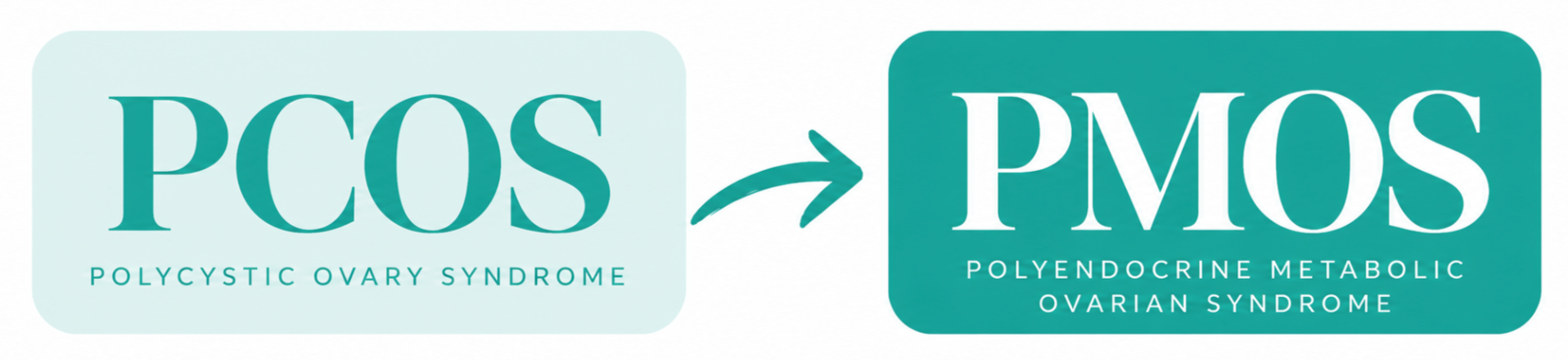
You may know it better as PCOS, or polycystic ovary syndrome.
The terminology is changing to Polyendocrine Metabolic Ovarian Syndrome, or PMOS, to better reflect the fact that this condition is about more than your ovaries.
And honestly, I think this is an important distinction.
Because when you hear “polycystic ovary syndrome,” it’s easy to think:
I have cysts on my ovaries.
But that's not really the whole story.
PMOS can involve your hormones, ovulation and metabolic health. And it can look very different from one woman to another.
That’s something I really want you to take away from this:
There isn't one “PMOS woman.”
You can have PMOS and have completely different symptoms from your friend, your sister or the woman you follow on Instagram.
“But My Periods Are Regular…”
This is something I hear a lot.
A woman will say:
“But my period comes every month, so I don't think my PCOS is affecting me.”
And this is where things can get a little more complicated.
Your menstrual cycle can tell us a lot about what may be happening with ovulation and your hormones, but having a monthly period doesn't automatically tell us everything about your reproductive health.
You might have regular cycles and still have questions about ovulation, hormones or metabolism.
On the other hand, maybe your periods are all over the place.
You might go 35 days.
Then 45.
Then 60.
And you're sitting there thinking, “How am I supposed to know when I'm ovulating?”
If that sounds familiar, you're not imagining how frustrating that can be.
What Does PMOS Actually Feel Like?
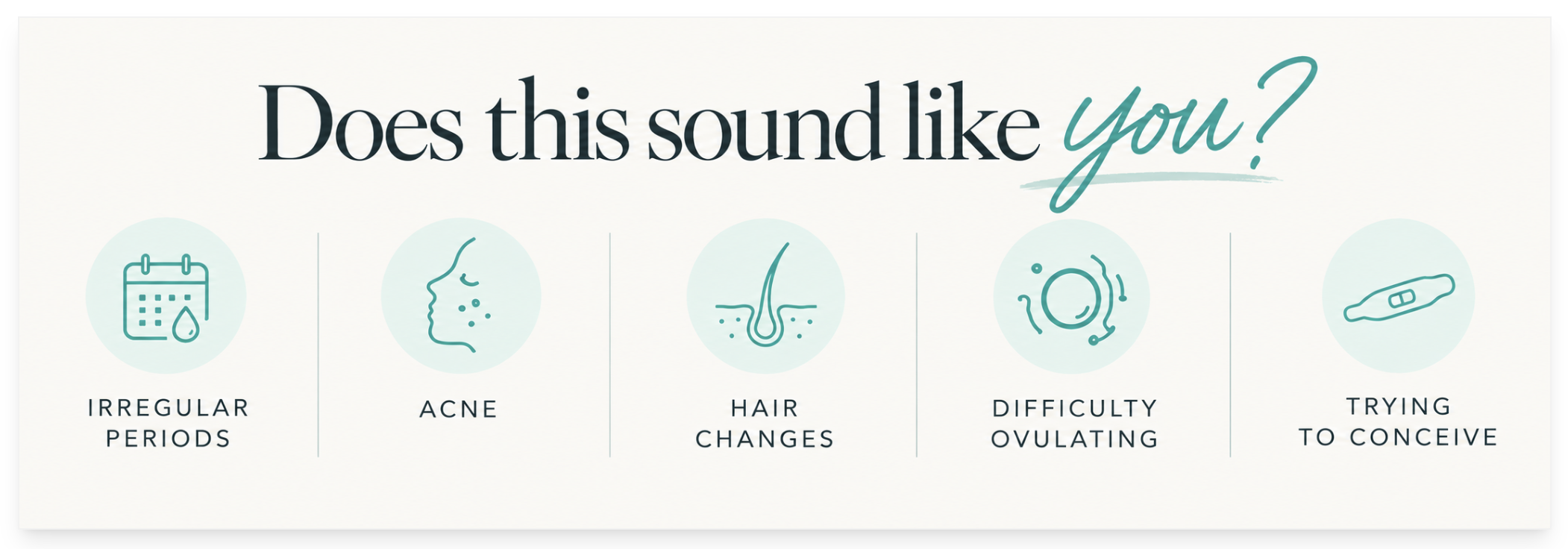
This is where I want you to stop for a second and think about your experience.
Have you noticed:
Irregular or missed periods?
Difficulty predicting ovulation?
Acne that seems tied to your hormones?
Increased facial or body hair?
Hair thinning?
Difficulty managing your weight despite your efforts?
Blood sugar or insulin-related concerns?
Trouble getting pregnant?
You don't need to have every single one of these symptoms.
And that's important.
Because one of the biggest problems with conditions like PMOS is that women sometimes compare their symptoms to someone else's and decide:
“Well, that isn't me.”
But your body doesn't have to follow someone else's checklist.
So, How Does PMOS Affect Fertility?
This is usually where the conversation gets really important for my clients.
You may not have been thinking much about your PCOS when you were younger.
Maybe irregular periods were just something you dealt with.
Maybe you were frustrated by acne.
Maybe you thought the extra hair was just genetics.
Then you started trying to have a baby.
And suddenly, you're paying attention to your cycle in a completely different way.
You're wondering:
Am I ovulating?
When am I ovulating?
Why isn't this happening?
For some women with PMOS, irregular or absent ovulation can make getting pregnant more difficult.
But I want to make something very clear:
A PMOS diagnosis does not mean you can't get pregnant.
It also doesn't mean PMOS is automatically the only reason you're having trouble conceiving.
And this is where I think women sometimes get stuck.
They receive a diagnosis and assume they've found the entire answer.
But a diagnosis can give you information without answering every question.
Your PMOS Is Not Someone Else's PMOS
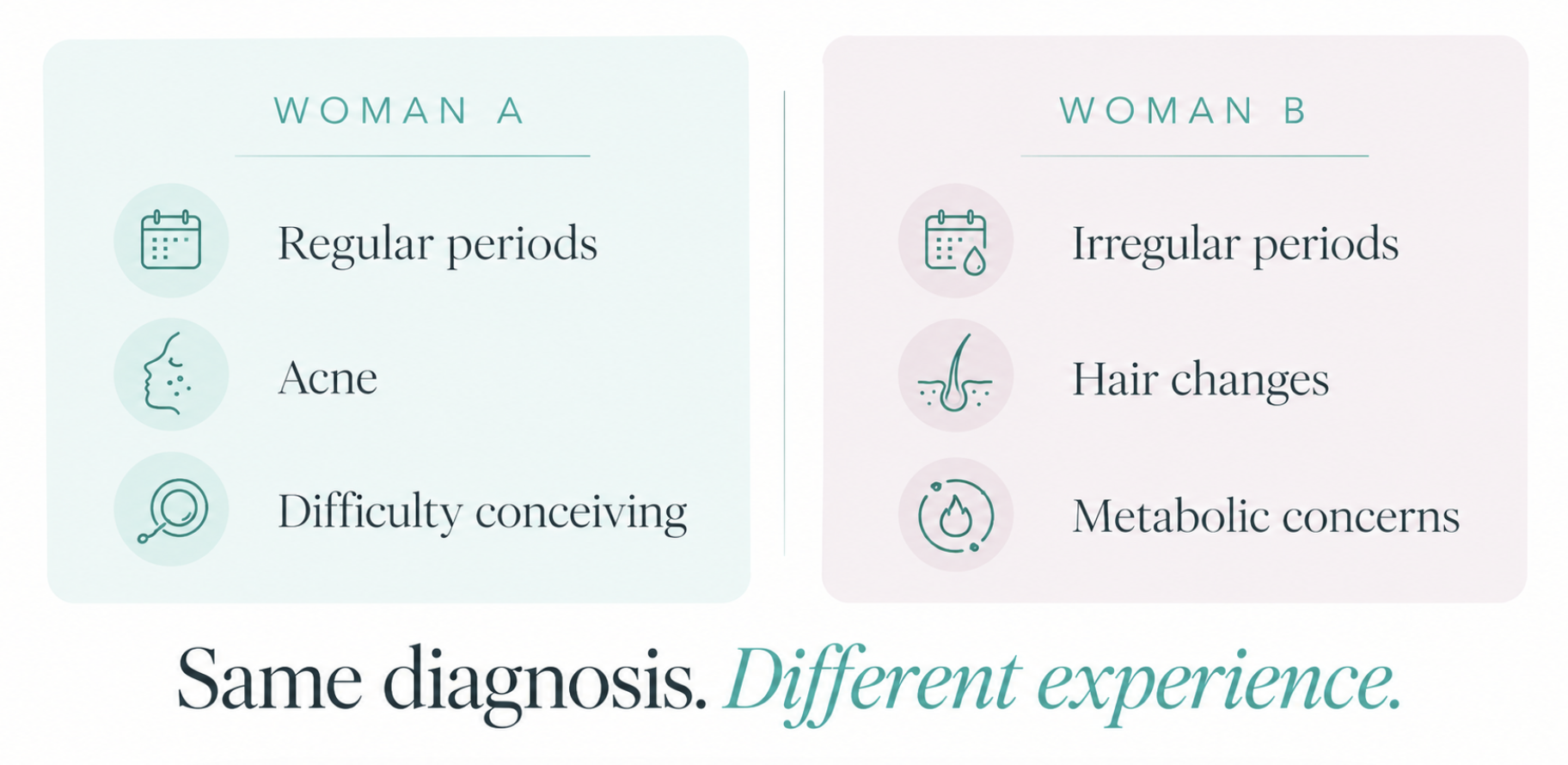
This might be one of the most important things I can tell you.
I don't want you comparing your fertility journey to another woman's.
Maybe she has PCOS and struggles with her weight.
You don't.
Maybe she has irregular periods.
You don't.
Maybe she was told her insulin resistance was the biggest issue.
You haven't been told that.
That doesn't mean one of you has “real” PCOS and the other doesn't.
PMOS can present differently in different women.
And your symptoms, your cycle history, your fertility history and your overall health all matter when you're trying to understand what is happening.
This is also why I don't love the idea of a generic “PCOS diet” being presented as the answer for everyone.
Your body isn't generic.
So your approach shouldn't be either.
What If You're Doing Everything “Right”?
This is another place where I see women become incredibly frustrated.
You're eating well.
You're exercising.
You're taking supplements.
You're tracking your cycle.
You're doing everything you've been told you're supposed to do.
And you're still asking:
“Why isn't this working?”
If that's you, please know that struggling to conceive doesn't mean you've failed.
And having PMOS doesn't mean your body is broken.
Sometimes the harder part is figuring out what actually matters in your individual situation.
That's a very different question from simply asking, “What should women with PCOS do?”
If You Have PMOS, What Should You Do?
First, don't panic.
And don't fall down a three-hour Google rabbit hole trying to diagnose yourself based on a list of symptoms.
Start with understanding your own patterns.
Pay attention to your cycle.
Notice changes in your symptoms.
Bring your questions to your healthcare provider.
And if you're trying to conceive and feel like something isn't adding up, don't ignore that feeling.
You are allowed to ask questions.
You're allowed to want more clarity.
And you're allowed to say:
“I understand that I have PCOS, but I still don't understand what is happening with my body.”
That is a completely reasonable question.
PMOS Is About More Than a Diagnosis
I think this is the biggest message I want to leave you with during PMOS Awareness Month.
Your diagnosis is a starting point.
It's not your entire fertility story.
If you've been diagnosed with PMOS, you're not simply a collection of symptoms.
You're a woman with your own cycle, your own history, your own fertility goals and your own questions.
And if you're sitting there thinking:
“Okay… this sounds a lot like me.”
Or maybe you're thinking:
“I've never thought about my PCOS that way before.”
That's exactly why I wanted you to read this.
Because sometimes the first step isn't finding another thing to add to your routine.
Sometimes it's getting curious about what your body is actually telling you.
Wondering What Your PMOS Means for Your Fertility?
If you've been diagnosed with PCOS or PMOS and you're trying to conceive, you may have a lot of questions about what your diagnosis means for you.
That's where personalized support can make a difference.
At Fertility Blooms, I work with women who are tired of guessing and want to better understand their individual fertility picture.
Because you shouldn't have to spend months Googling symptoms and wondering which piece of advice actually applies to you.
If you're ready to have that conversation, I'd love to help you get started.